

“Either you support Duterte, or you support crime and drug lords.”
“Either you condemn Duterte, or you don’t care about human rights.”
I don’t engage in social media debates because of this kind of Black-and-White Thinking that oversimplifies complex issues into two extreme choices. It ignores the complexity of governance, law enforcement, and human rights, leaving no room for critical discussion.
If you’re reading this blog, I appreciate your willingness to consider a perspective beyond social media soundbites.
Why We Focus on Rare Tragedies Over Common Successes
Recently, there’s been a growing fear of flying, fueled by constant media coverage of airline accidents. As someone who travels frequently, I too have found myself paying more attention to safety protocols, despite knowing that doing so doesn’t change the actual likelihood of an accident.
But while reviewing logical fallacies for my upcoming Mastermind Session, I noticed a pattern that sheds light on our collective perception.
Aviation Safety Statistics
In 2024, the aviation industry saw approximately 40.6 million flights, yet only 7 fatal accidents occurred, resulting in 244 fatalities—an accident rate of just 1.13 per million flights. Statistically, you would have to fly every single day for 15,871 years to experience a fatal accident. (Source: IATA.org)
Despite these reassuring numbers, public perception is far from aligned with reality.
What’s increased isn’t the number of crashes, but the reporting of them, creating a distorted sense of risk.
This is known as negativity bias.
The Negativity Bias: Why Rare Events Seem More Common
Humans are wired to focus more on negative events than positive ones, and this cognitive bias often leads us to overemphasize rare tragedies while overlooking everyday successes.
Take plane crashes, for example—despite being extraordinarily rare, they receive extensive media coverage, making them seem more common than they actually are. Meanwhile, the millions of flights that land without incident are overlooked because they aren’t deemed “newsworthy.”
The same applies to the COVID-19 vaccine: while a few deaths were reported, millions of lives were saved, yet the successes are often lost in the background. There are countless such examples, where positive outcomes are overshadowed by rare, negative events.
The War on Drugs: Seen Tragedies vs. Unseen Successes
This same negativity bias influences how we perceive matters like the war on drugs. Fatalities resulting from enforcement actions are widely reported, fueling outrage and scrutiny. However, the positive impact—such as lives saved from drug-related violence, communities kept safer, and individuals steered away from addiction—is far less visible and often goes unrecognized.
During the drug war, over 1.2 million individuals surrendered and voluntarily sought rehabilitation. This scale highlights the reach of the initiative. When viewed through a different lens, without these interventions, the country could have seen far more ruined lives and deaths due to drug-related violence—far exceeding the reported 5,000 cases of “extrajudicial killings” (which some could argue were legitimate police operations).
That’s why narratives around collateral damage often focus on specific, high-profile cases like Kian Delos Santos—because they are rare, well-documented, and emotionally compelling, unlike the millions of people who continue to live peacefully as a result of the war on drugs.
Balancing Perception and Reality
Recognizing the negativity bias doesn’t mean ignoring tragedies—it means seeing the full picture. While collateral damage in any policy needs to be addressed, it’s also important to recognize the unseen benefits and consider the greater good for the majority.
Just as the rarity of plane crashes doesn’t negate the overall safety of air travel, isolated incidents in drug enforcement shouldn’t completely overshadow the broader impact of crime prevention.
The Role of Media in Shaping Perception
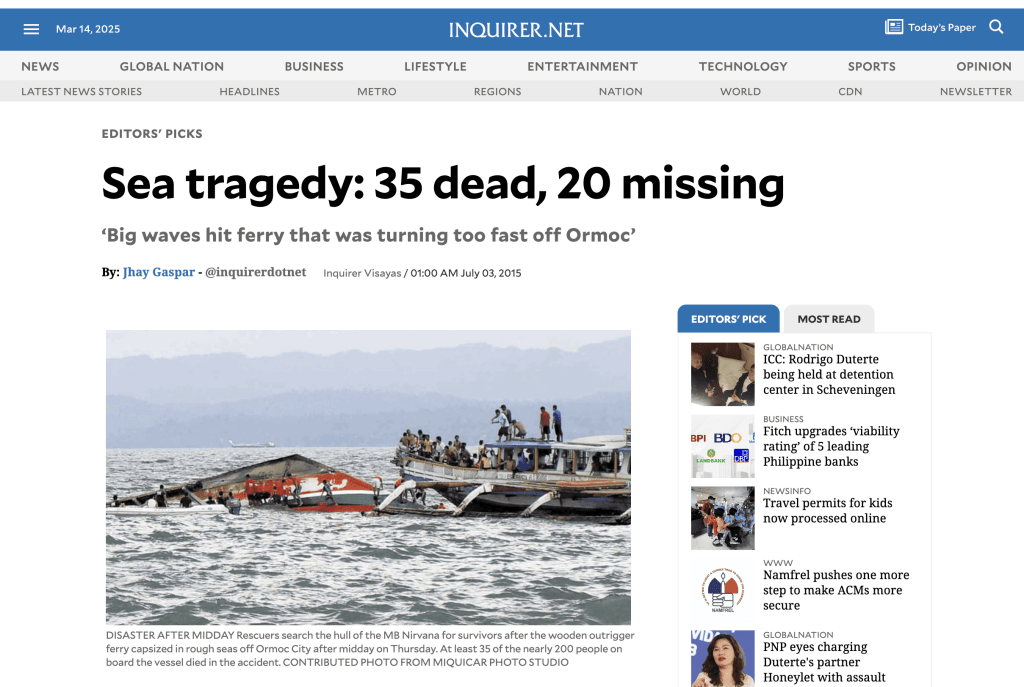
Media plays a critical role in shaping how we perceive events. I know firsthand how the industry operates. Journalists are trained to find the odd, the shocking, and the emotionally gripping—to frame stories in ways that capture attention and evoke strong reactions. While objectivity is the goal, in practice, headlines are designed to make readers care, and stories are often sensationalized to maximize engagement.
Western media, in particular, often struggles to capture the full context of issues in countries like the Philippines. The narrative about Duterte, for example, is often reduced to that of an authoritarian figure who launched a brutal war on drugs. What’s rarely told, however, is the reality before his presidency—the rampant crime, corruption, and the deep frustrations of ordinary Filipinos that led to his rise. He wasn’t just a dictator who took power and began a violent crackdown; he was a response to an existing crisis. Duterte was the result of a 16-million-strong pressure demanding change because Filipinos had grown tired of inaction. Ignoring that context creates an incomplete and misleading picture, which is why mainstream media often only scratches the surface.
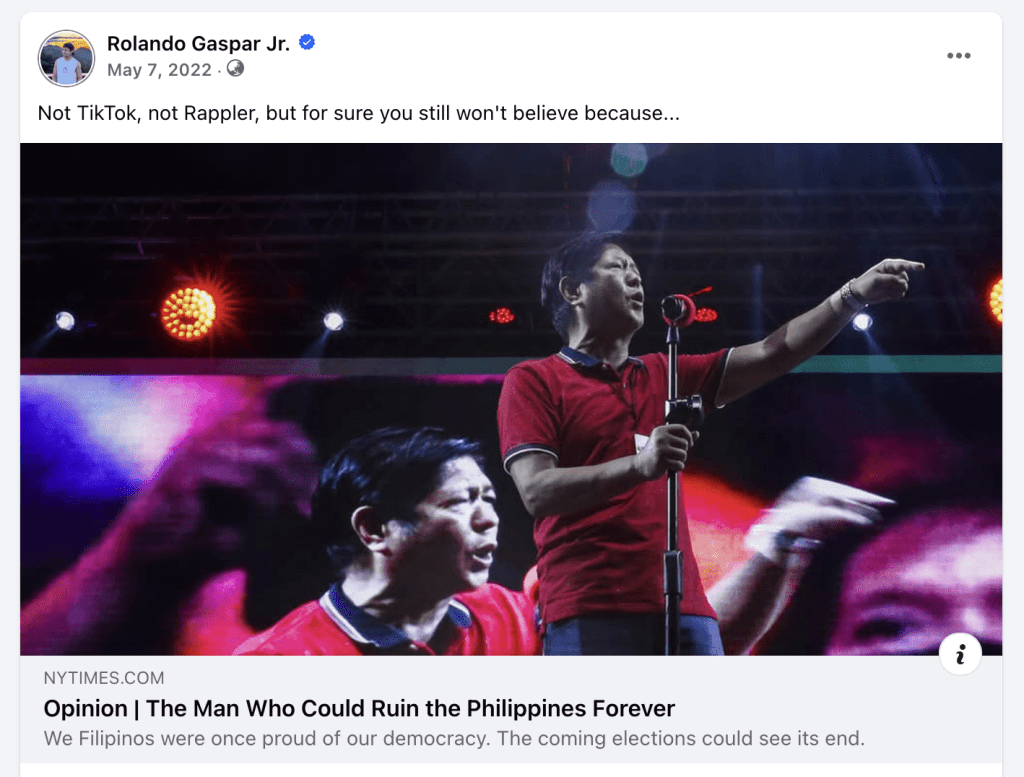
Over time, I have found myself losing trust in mainstream media. Consuming news today often feels less about gaining knowledge and more about being fed a curated narrative. If you rely solely on headlines and social media outrage, you may believe you’re informed, but in reality, you’re only seeing what is most amplified—not necessarily what is most accurate.
That’s why critical thinking and independent research are vital. If you don’t take the time to examine the bigger picture, seek out multiple sources, and question prevailing narratives, you will be manipulated by selective storytelling and may end up spreading ignorance on social media.
The War on Drugs: A Necessary Battle with Flawed Execution
I support the former president’s vision of a drug-free Philippines because the scale of our nation’s drug and corruption problems demanded decisive action. Poverty and addiction is a devastating combination, and it is just the tip of the iceberg. However, while the motive behind the war on drugs was well-intended, its execution was flawed and reckless.
The war on drugs was a deeply complex issue with many stakeholders involved. While Duterte issued the directive, its execution was left to the Philippine National Police (PNP). The PNP, despite being under the command of the president, is an institution with its own ethical standards and operational protocols. It should have exercised greater discernment and judgment in implementation, rather than being swayed by the president’s aggressive rhetoric. This led to instances where police officers, under pressure to deliver results, resorted to excessive force and potentially “committed human rights violations”. If the issue lies in leadership, then accountability should be enforced at every level—including at the top of the PNP, where a lack of proper documentation, failure to educate the public, and neglecting to counter the fear-mongering media narrative only exacerbated the situation.
It’s similar to if my CEO set a clear vision for the company’s growth, my role as CMO was to oversee the execution of that vision. While I fully support the end goal, my responsibility would be to ensure that the strategies and actions align with the company’s core values and ethical standards. I would need to use discernment and judgment to ensure we’re not cutting corners or compromising our principles in the pursuit of success. Just as I would not allow immoral tactics that jeopardize the company’s integrity, the same should have been done by PNP to the implementation of the war on drugs.
The ICC Case: Justice or Political Power Play?
Many believed that Duterte left office having accomplished much, with his initiatives felt even at the local level—I personally witnessed this in my own community. However, the International Criminal Court (ICC), pressured by human rights advocates, took legal action. This is where political maneuvering comes into play. The Marcos administration saw an opportunity to capitalize on Duterte’s weakened position and acted swiftly, while Duterte’s camp responded by seeking public sympathy to rally support.
I do not support Duterte being turned over to the ICC, regardless of its jurisdiction, as this undermines our national sovereignty. We are being branded as a weak and submissive nation in the eyes of the international community.
What now?
I am just saddened by the growing political divide over this issue that is distracting us from the real problem—the incompetence of the current administration and the declining state of our nation. Filipinos are being pulled into a partisan battle fueled by two opposing political factions. Social media has become a battleground, oscillating between pleas for sympathy and demands for justice for the “victims” of the drug war. It’s more about emotions than meaningful discourse.
I wish Filipinos could rise above politics, shift the national conversation from blind loyalty to critical thinking, and reject the toxic cycle of partisanship. The real challenge is not in winning online arguments or proving a point—it’s in confronting the systemic issues that is causing the downfall of our nation.
Honestly, I saw this coming.
If you don’t learn from your mistakes, you’re doomed to repeat them.
The Author
As a former government official who worked closely with politicians—including those leading anti-drug efforts—and as someone who personally formulated and implemented anti-drug programs, my insights come from both experience and expertise. My perspective is also shaped by my PhD studies in Public Administration, my three years of teaching Ethics and Moral Principles at the university, and my eight years in journalism, covering politics, law enforcement, and editing police beat stories to make them more newsworthy. My training ground as a news correspondent was covering drug den raids and buy-bust operations amid a hail of bullets.
I’ve trained university journalists to examine not just both sides of a story, but all sides of the story.
Stop saying media are bias because we truly are.
In fact I would encourage student journalists to be bias—not in the sense of favoring one side without question, but in being biased toward the truth and the community they serve, and amplifying the voices of the voiceless and oppressed. Media doesn’t mean middle, it means medium.
While it’s important to seek out diverse sources and consider all angles, neutrality in media can be an illusion. Bias is inherent in human nature, and while I acknowledge my own, I refuse the extremes of either fully aligning with one side or claiming complete neutrality. Doing so risks missing critical nuances and a deeper understanding of the issue at hand. Extreme neutrality can breed apathy, detachment from crucial issues, and a reluctance to take necessary action. It’s more constructive to recognize the origins of your biases, ensure they don’t cloud a thorough and balanced evaluation of all perspectives, and balance them with a genuine effort to engage with opposing viewpoints.
Though I am no longer in government, affiliated with any political party, or residing in the Philippines, I remain deeply invested in this issue as a concerned Filipino citizen. I observe rather than absorb perspectives, recognizing that everyone’s views and biases are shaped by their experiences and environments. While I may not always agree with others, I respect their convictions and have no intention of changing their views.
Perhaps I am no longer as aggressive or extreme as I once was when I was a full-time community journalist because now, being geographically detached, I have the advantage of observing the situation from a distance. As the saying goes, “You can’t read the label from inside the jar.” Being away from the immediate emotional and political pressures gives me the clarity to see the bigger picture—without the noise that often clouds judgment when we’re too close to the issue.
 Jhayography
Leave a comment