

Alright don’t get me wrong, I love Canggu. It has been my home for months. But let me stay out of the overly saturated traffic of “The Best Things About Canggu” and offer a fresh perspectives. Out of the hundreds things you’ll definitely love in Canggu, let me present to you some you might not.
Canggu has become a dream destination for remote workers, entrepreneurs, and digital nomads looking for a tropical paradise with a thriving community. It’s easy to romanticize the idea of working from beachfront cafés, riding a scooter through lush rice fields, and enjoying the laid-back lifestyle. But once you actually live here, you start to notice some unexpected challenges—things that no one mentions in the glossy Instagram posts.
Here are some surprising downsides of living in Canggu that you probably didn’t expect:
1. Pulsa Problems: Running Out of Phone Credit at the Worst Time
Unlike in some countries where mobile plans come with auto-renew and are easy to top-up, in Indonesia, prepaid mobile credit (pulsa) and data need to be manually topped up. The problem? If you forget, you can suddenly find yourself without internet, unable to book a Gojek, or even worse—stuck somewhere with no way to contact anyone.
You can only top-up on your own if you have e-wallet like GoPay or ShopeePay like locals, but it needs an Indonesian bank account, which not all foreigners have.
Shops that sell pulsa charge a markup “admin fee” which doubles the price. To worsen, if you don’t speak Bahasa Indonesia, explaining what you need can be tricky. Ya?
Tip: Always buy extra pulsa in advance.
2. The Struggle of Being a Pedestrian
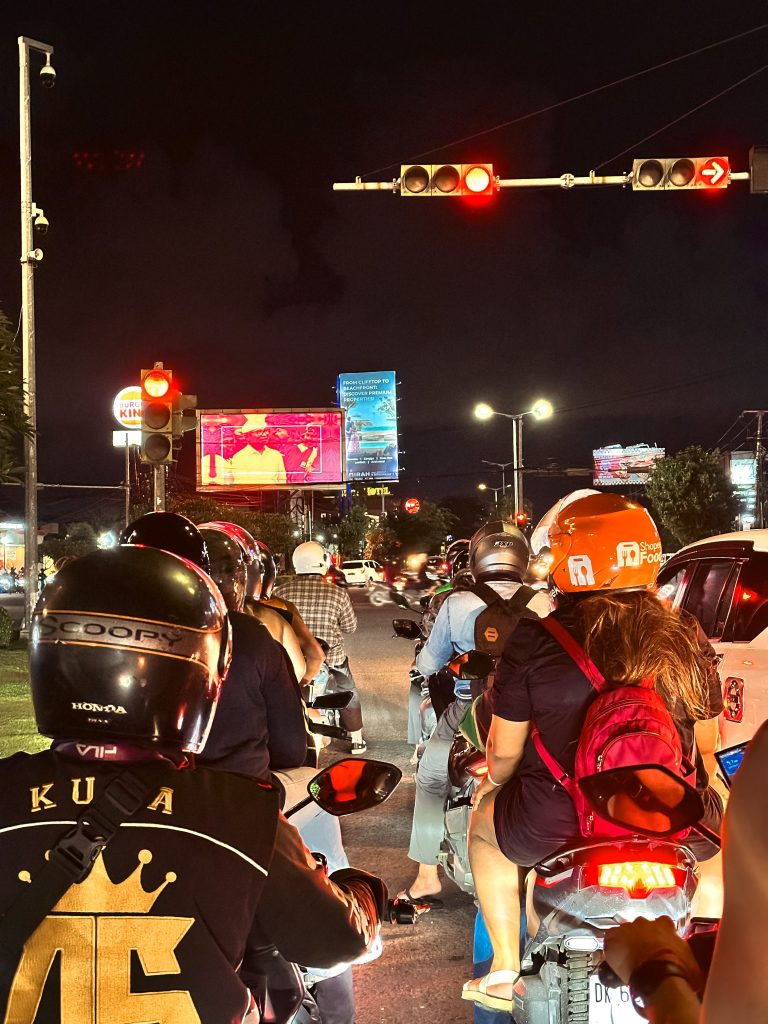
Canggu is a scooter paradise, but if you prefer to walk, good luck. Sidewalks are rare, and when they do exist, they’re either too narrow, broken, or taken over by parked motorbikes. You’ll often find yourself walking on the road, dodging scooters and cars while hoping no one speeds past too close. Of course you don’t want to end up in one of the Bali Pages mocking Bule.
At night, it gets worse. Many streets are poorly lit, making it risky to walk home after dinner or a night out. You’ll have to rely on your phone’s flashlight or hope a random warung’s neon sign gives you enough visibility.
Tip: If you plan to walk often, get a reflective band or flashlight, and always be extra cautious at intersections.
3. Surprise! Your Budget Villa Will Have a Pool During Rainy Season
Canggu’s beautiful villas often look perfect in photos, but many aren’t built with proper drainage in mind. When the rainy season hits, streets flood within minutes, and if your villa isn’t elevated, water can easily seep inside.
Some areas are worse than others, with certain roads becoming impassable after heavy rain. The infamous Berawa shortcut is a nightmare when flooded, with bikes skidding and getting stuck. Even if your house doesn’t flood, you might still have to deal with humidity, mold, and leaky roofs.
Tip: Before renting a villa, check the elevation and ask if it has flood protection measures. Always have a backup plan (or swimming gears) in case you get stuck at home during heavy rain. 🏊🏻
4. The Smell of Burning Trash in the Morning (or Night)
Bali has a waste management problem, and Canggu is no exception. While efforts are being made to improve recycling and waste disposal, many locals still burn their trash—sometimes in the early morning or late at night.
If you’re sensitive to smoke, you might wake up to the smell of burning plastic drifting into your villa. And if you enjoy working outdoors, an unexpected trash-burning session can quickly ruin your day.
Tip: Choose a villa away from dense residential areas, and invest in an air purifier if you’re sensitive to smoke.
5. Slow (or Unreliable) Internet in Some Areas
Canggu has a strong digital nomad community, so you’d think the internet would be consistently fast everywhere. But the reality is, it depends on your provider and location. Some villas have outdated or weak WiFi setups, and in certain areas, the internet slows down at peak hours.
Power outages can also randomly occur, which means even if your internet is fine, your router might go offline unexpectedly. Coworking spaces and cafés usually have better connections, but relying on them full-time comes with a price.
Tip: Always check the internet speed before signing a villa lease, and get a backup SIM card with mobile data as an emergency solution.
6. Mysterious Construction Noises (That Never Seem to End)
Canggu is growing fast, and that means constant construction. Whether it’s a new café, villa, or boutique hotel, there’s always something being built. If you move into a “quiet” neighborhood, don’t be surprised if construction suddenly starts next door a few weeks later.
The worst part? There are no strict noise regulations. Construction can happen at random hours, and if your villa is near a busy road, be prepared for jackhammers and drilling noises at the most inconvenient times.
Tip: Visit your potential rental during different times of the day to check for construction noise. If you’re already living there, noise-canceling headphones will be your best friend.
7. Random Blackouts (Sometimes During Your Work Calls)
Power outages in Canggu aren’t as bad as in other parts of Bali, but they still happen. Sometimes it’s a scheduled outage for maintenance, other times it’s completely random. If you’re working remotely and suddenly lose electricity mid-Zoom call, you’ll quickly realize how much you depend on stable power.
Most cafés and coworking spaces have generators, but not all villas do. So if you’re at home when the power goes out, you might be stuck without WiFi, air conditioning, or even water (since many villas use electric pumps for water supply).
Tip: Invest in a portable power bank and have a backup plan for when blackouts happen—like a nearby café you can escape to.
8. Beach Erosion and Dirty Shorelines
Everyone comes to Canggu expecting pristine beaches, but the reality is different. During the rainy season, the beaches—especially Batu Bolong and Berawa—can get covered in trash washed in from the ocean. Some days, the shoreline is completely littered with plastic, making it unappealing for a swim or a sunset stroll.
On top of that, Canggu’s coastline is eroding due to overdevelopment and rising tides. Some beachfront cafés and warungs are struggling to keep their structures intact, and it’s unclear how the area will handle this long-term.
Tip: If you love clean beaches, head to Pererenan or even further north towards Seseh, where the shores are often cleaner.
9. The Challenge of Getting an Official Long-Term Rental
Finding a long-term villa in Canggu isn’t as easy as it sounds. Many landlords prefer short-term rentals because they can charge higher prices, especially with the influx of tourists. Some will quote a price in IDR, but if they find out you’re a foreigner, the price magically increases.
On top of that, lease agreements can be informal, with some landlords changing terms midway through your stay. And if you don’t have an Indonesian bank account, paying rent can be another hurdle.
Tip: Work with a trusted local agent to negotiate a fair deal, and always sign a clear rental contract.
So…
Canggu is still an amazing place to live, but it’s important to know what you’re getting into beyond the usual complaints about traffic and tourists. These little inconveniences can add up, especially if you’re planning to stay long-term.
That said, if you’re adaptable and prepared, you can work around most of these challenges and still enjoy the tropical lifestyle. Just make sure to go in with realistic expectations—and maybe keep a flashlight, extra pulsa, and noise-canceling headphones handy!
Would you still move to Canggu despite these downsides? Or if you’re already living here, what unexpected challenges have you faced? Let me know in the comments!
Here’s how much I spent in a month living in Canggu:
 Jhayography
Leave a comment